Marie Le Coze
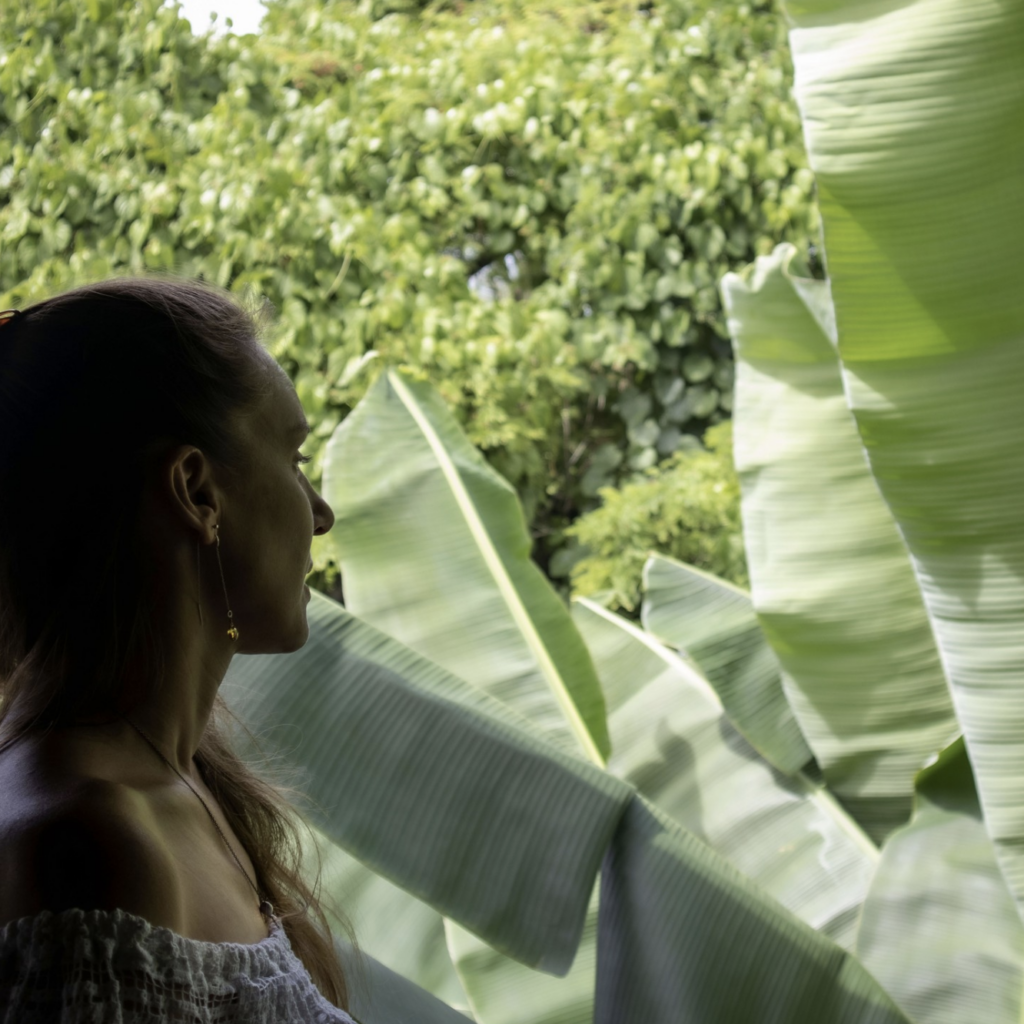
Depuis toujours, les plantes occupent une place particulière dans ma vie.
Parmi mes premiers souvenirs figurent déjà des herbiers, des heures passées à observer, collecter, dessiner et identifier les espèces qui m’entouraient. Cette fascination pour le monde végétal ne m’a jamais quittée.
Au fil des années, elle m’a conduite à explorer différents territoires tropicaux et à consacrer une grande partie de mon parcours à l’étude des relations entre les êtres humains et les plantes. Madagascar a marqué cette trajectoire de façon particulière, à travers plusieurs années de recherche et de terrain consacrées aux savoirs botaniques traditionnels.
Installée dans l’océan Indien, je poursuis cette même quête à travers l’ethnobotanique, l’illustration botanique et la création artistique. Trois approches complémentaires qui me permettent d’explorer, de documenter et de transmettre la richesse du vivant.
Qu’il s’agisse d’une illustration scientifique, d’une œuvre originale ou d’un projet de valorisation du patrimoine végétal, mon travail est guidé par la même conviction : les plantes portent en elles des histoires, des savoirs et des liens précieux avec le monde qui nous entoure.
À travers mes dessins, mes recherches et mes créations, je cherche à rendre visible cette richesse et à inviter chacun à porter un regard plus attentif sur le vivant.
Plants have held a special place in my life for as long as I can remember.
Among my earliest memories are herbariums and countless hours spent observing, collecting, drawing and identifying the species around me. This fascination with the plant world has never left me.
Over the years, it led me to explore different tropical regions and to devote much of my work to understanding the relationships between people and plants. Madagascar played a particularly important role in this journey, through several years of research and fieldwork dedicated to traditional botanical knowledge.
Today, based in the Indian Ocean, I continue this exploration through ethnobotany, botanical illustration and artistic creation. Three complementary practices that allow me to investigate, document and share the richness of the living world.
Whether through scientific illustration, original artworks or projects dedicated to botanical heritage, my work is guided by the same conviction: plants carry stories, knowledge and meaningful connections that deserve to be preserved and shared.
Through my drawings, research and creative work, I seek to reveal this richness and invite others to look more closely at the living world around them.
Parcours
Des forêts françaises aux mystérieux baobabs de Madagascar, mon parcours a toujours été guidé par une fascination profonde pour le monde végétal.
Depuis aussi loin que remontent mes souvenirs, les plantes occupent une place particulière dans ma vie. Avant même de connaître le mot botanique, je récoltais déjà fleurs et feuilles pour confectionner des cadres de fleurs séchées. Les premiers herbiers sont vite venus compléter ces collections, accompagnés d’une envie grandissante de comprendre, reconnaître et nommer les espèces qui m’entouraient.
En 2007, un stage à l’Herbier de Guyane me fait découvrir la forêt tropicale humide de Guyane française. Plusieurs missions sur la station scientifique des Nouragues suivront, ouvrant la porte à un univers fascinant où biodiversité, écologie et recherche de terrain se rencontrent.
Deux ans plus tard, je pars pour Madagascar. Pendant près d’un an, je travaille avec l’association malgache Mad’arbres et me forme à la grimpe arboricole. Cette immersion me permet d’explorer la biodiversité exceptionnelle de l’île depuis les cimes des arbres et marque le début d’une relation durable avec l’océan Indien.
En 2012, une formation en écologie tropicale au Parc National de La Lopé, au Gabon, approfondit encore mon intérêt pour les écosystèmes tropicaux et les interactions complexes qui relient les êtres vivants à leur environnement.
Peu à peu, l’ethnobotanique s’impose comme une évidence. Comprendre les relations entre les sociétés humaines et les plantes devient le fil conducteur de mes recherches. À Madagascar, je consacre plusieurs années à l’étude des savoirs botaniques des Mikea, un peuple de chasseurs-cueilleurs vivant dans les forêts sèches du sud-ouest de l’île.
Ces travaux donneront naissance à mon mémoire de l’École Pratique des Hautes Études (EPHE) intitulé :
Les plantes spontanées et leurs usages chez les Mikea à Madagascar. Incidence de la déforestation sur l’évolution de leur mode de vie.
En 2014, les Fidji deviennent à leur tour un terrain d’exploration. Botanique, dessin, photographie et découverte de nouvelles cultures s’y entremêlent naturellement.
En 2016, Zampela voit le jour. Je comprends alors que je ne souhaite plus choisir entre science et création. L’observation minutieuse du vivant nourrit mon travail artistique tandis que le dessin devient un prolongement naturel de mon regard d’ethnobotaniste.
Après plusieurs années passées entre Madagascar, Mayotte et l’océan Indien, j’entreprends en 2021 une formation en illustration botanique auprès du Royal Botanic Garden Edinburgh (RBGE), institution de référence internationale dans cette discipline. Cette étape vient consolider le dialogue entre rigueur scientifique et exigence artistique qui guide aujourd’hui l’ensemble de mon travail.
Installée à Maurice depuis 2025, je poursuis cette démarche à travers l’ethnobotanique, l’illustration botanique et la création artistique. Mon travail cherche à documenter, transmettre et mettre en valeur le patrimoine végétal tout en révélant les histoires, les savoirs et la beauté du vivant.
Journey
From the forests of France to the mysterious baobabs of Madagascar, my journey has always been guided by a deep fascination with the plant world.
At the heart of all my projects lies a lifelong passion for plants. As a child, I collected flowers and leaves to create pressed-flower frames. Before long came my first herbariums and a desire to learn the name of every species I encountered. Observing, understanding and working alongside nature quickly became an essential part of who I am.
A defining chapter began in 2007 during an internship at the Herbarium of French Guiana. There, I discovered the tropical rainforests of the Amazon and later took part in several field missions at the Nouragues Research Station. These experiences, combined with countless encounters in the field, greatly expanded my understanding of tropical biodiversity and forest ecosystems.
In 2009, I left France to explore Madagascar, an island that had fascinated me for many years. For nearly a year, I worked with Mad’arbres, a Malagasy tree-climbing association. Through this experience, I was trained in canopy access techniques while discovering the extraordinary richness of Madagascar’s biodiversity. It was also during this period that I fell in love with the Indian Ocean region, from Mayotte and the Comoros to Réunion Island.
In 2012, I participated in a tropical ecology training programme in Lopé National Park, Gabon. This immersion marked another important step in my discovery of Africa, its forests, savannas and remarkable wildlife, which had long captured my imagination.
Together, these experiences firmly anchored my passion for tropical biodiversity and for the relationships between people and their natural environments.
Ethnobotany soon became an obvious path. I remain convinced that many traditional plant-based knowledge systems are still poorly documented, despite representing an invaluable cultural heritage. Preserving these traditions is, in my view, both a scientific responsibility and a duty of memory.
In Madagascar, I became particularly interested in the Mikea, a hunter-gatherer people living within the spiny dry forests of the island’s southwest. Their knowledge of the natural environment is extraordinary. I devoted three years of research to documenting their use of wild plants, work that culminated in my thesis at the École Pratique des Hautes Études (EPHE), entitled:
Wild Plants and Their Uses Among the Mikea of Madagascar: The Impact of Deforestation on Changes in Their Way of Life.
In 2014, I moved to Fiji, settling on a small island in the South Pacific. There, I divided my time between botany, discovering new cultures, drawing and photography, continuing my exploration of the living world in all its forms.
In 2016, Zampela was born. It became clear to me that drawing deserved a place in my life equal to that of science. The connection between the two felt natural: careful observation of plants nourished my artistic practice, while drawing became a powerful tool for sharing knowledge and inspiring curiosity.
My return to the Indian Ocean in 2018 marked the beginning of a new chapter. Madagascar never truly left me, but Mauritius became a new source of inspiration. In 2021, I settled in Mayotte, a global hotspot for baobabs. There, I took an important step by undertaking formal training in botanical illustration through the Royal Botanic Garden Edinburgh (RBGE), one of the world’s leading institutions in the field. This training strengthened the union between scientific rigour and artistic excellence that defines my work today.
In 2025, I returned to Mauritius with a desire to contribute to the recognition and preservation of its botanical heritage. Through botanical illustration, ethnobotany and artistic creation, I develop visual archives designed to document, preserve and transmit the memory of plants, landscapes and territories.
Today, my work brings together science, art and heritage in an ongoing effort to better understand, celebrate and share the richness of the living world.